A Photograph, A Life, A Quiet Strength
There are moments in life when the past finds us unexpectedly.
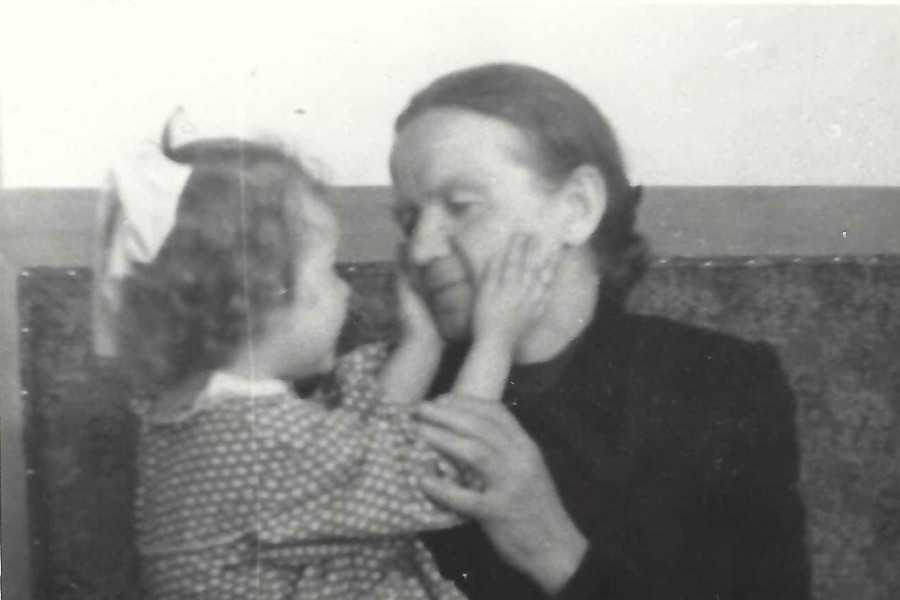
The other day, while sorting through old books and familiar belongings I have kept for so many years, I came across a small, timeworn photograph. In it, a little girl—no more than three or four years old—is holding tightly to an elderly woman. That little girl is me. And the woman I am embracing is my great-aunt, Agafya.
I stood there for a long time, holding that photograph in my hands, feeling as though a door had quietly opened into another world—a world of lives lived before mine, of stories that shaped my family, and, in ways I am still discovering, shaped me.
This is her story. And I want my children and grandchildren to know it.
Agafya was the sister of my grandfather, Ivan Pavlovich Velgosha. She was born in 1904 in Ukraine, into a time when life was simple in appearance, yet deeply demanding. Later, her family moved to Kazakhstan, following the promise of new land and a new beginning.
As a young woman, she married a blacksmith named Mikhail and returned with him to Ukraine. In those years, families lived together under one roof, bound by duty and survival. A young bride became part of her husband’s household, and her days were filled with work from dawn until nightfall.
They lived from the land—growing their food, tending animals, preparing for long winters. Agafya worked in the fields, cared for livestock, and carried responsibilities that would seem overwhelming to many of us today. But she did not complain. She loved her husband deeply and met life with quiet courage.
When she became a mother, her days grew even harder. After nursing her baby boy, Pavel, she would rush to milk the cows, then head to the fields to cut grass for winter feed. There was little rest, and even less kindness from her mother-in-law, who showed no compassion for the young woman trying to hold everything together.
That first cold winter, her son Pavel fell ill. Despite their desperate love and efforts, death came too soon, taking little Pavel from this world. Grief settled over their small home like a heavy fog.
Not long after, her husband became sick with pneumonia. Agafya cared for him with all the strength she had left, but his life slipped away before her eyes. And at that very moment, she was carrying their second child.
Grief followed grief. She buried her husband.
This was the late 1920s—a time when medicine could offer little help, and loss was a familiar, merciless companion.
A week later, her daughter Raya was born.
Agafya was exhausted, heartbroken, and alone. Her mother was far away in Kazakhstan, and the home she lived in had become a place of hardship. Food was kept locked away. Work never ended. Kindness was scarce.
Her newborn daughter did not live long.
And then, in a moment of quiet but extraordinary courage, Agafya made a decision that still feels almost unimaginable—she would leave. Alone, on foot, she began her journey from Ukraine to Kazakhstan, a distance of nearly 2,800 kilometers.
It is hard to comprehend such a journey. Step after step, through grief, exhaustion, and uncertainty, she walked.
And yet, even in the hardest of times, kindness finds its way into the story.
One day, a man traveling by horse-drawn cart noticed her walking along the road. Seeing her condition, he offered her a ride, gently assuring her that his intentions were good. Agafya accepted.
That simple act of compassion carried her forward.
Finally, heartbroken and weary, Agafya was back in the warm embrace of her own family.
Life did not become easy.
Later, Agafya married a widower with four children, the youngest only six months old. She raised them as her own—feeding them, guiding them, giving them what she herself had been denied: care and steadiness.
Her husband, however, was not faithful. In time, he left her for another woman, and their marriage came to an end.
Still, she endured.
She saw the daughters married. She watched the sons leave for the army. She fulfilled her quiet duty, day after day, without bitterness, without complaint.
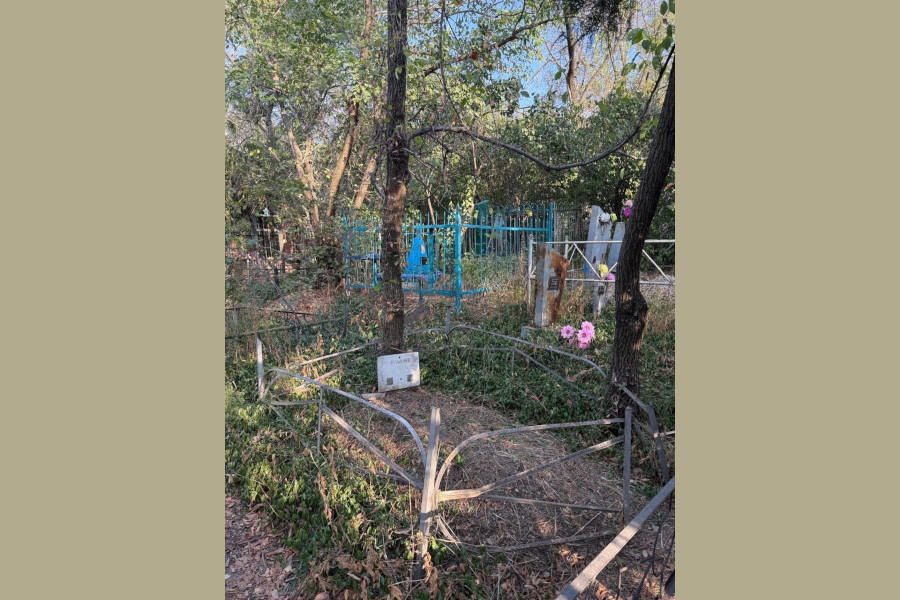
In her later years, she lived under the same roof as her brother Ivan Pavlovich. And on a warm October day, in Alma-Ata, she was laid to rest in a simple rural cemetery.
My great-aunt never spoke of her suffering.
I learned the story of her life much later from my mother, in pieces, like fragments of a long-forgotten song. And now, when I look at that photograph, I no longer see just a child and an elderly woman.
I see a life of unimaginable strength.
I see love that endured loss after loss.
I see a woman who kept going.
Grandma Gasha has been gone for many years now… but how I wish, just once more, I could hold her close and rest my cheek against hers.
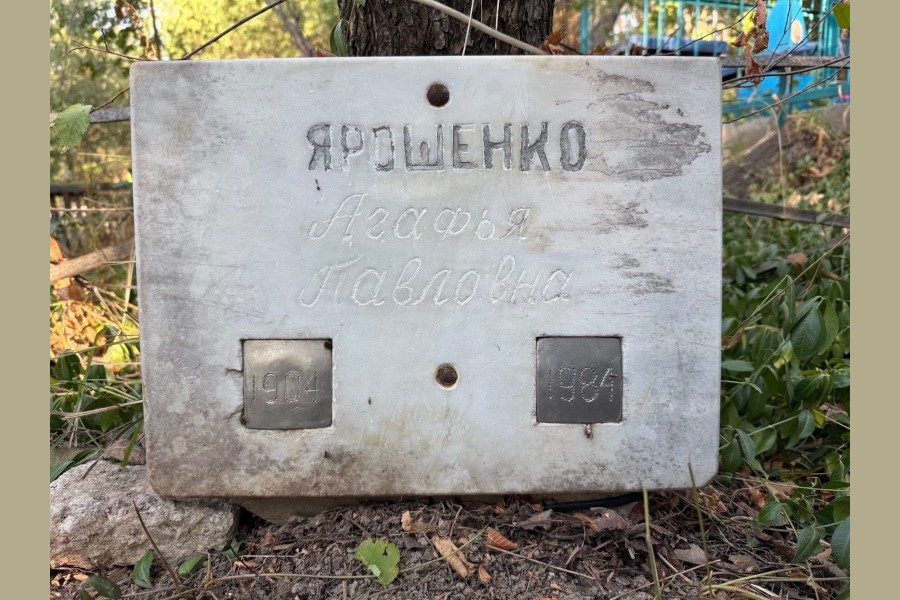
Агафья Павловна Ярошенко (1904-1984)

Leave a Comment